How to Compare Organic Mattress Certifications: GOTS, GOLS, OEKO-TEX and Beyond
A practical guide to understanding mattress certifications for organic and non-toxic products. Learn what each standard covers, which are most relevant for NYC shoppers, and how to read labels beyond marketing claims.
In the quiet, almost ceremonial act of choosing a mattress, the labels often pretend to whisper truth while shouting marketing. For a city like New York, where daily life is a dense weave of apartments, regulatory nuances, and a thrumming eco-conscious sensibility, the right certification can be more than a badge—it can be a compass. This guide unfolds the most widely recognized certifications for organic and non-toxic mattresses, pairing them with practical advice for NYC shoppers who want clarity over rhetoric.
We begin with three time-honored standards—GOTS, GOLS, and OEKO-TEX—before moving to other labels that populate the sleep marketplace. Along the way, we’ll refer to a representative product from Obasan, a company known for its organic Dunlop latex mattresses for children. This is not a sales pitch; it’s a case study in how certifications intersect with material choices, manufacturing practices, and what a label can and cannot guarantee.
A quick map of the major certification families
Certifications function like a relay race: each flag bearer is responsible for a portion of the journey from raw material to the finished product. The label you hold in your hand or see on a product page tells you about where and how the pillow, spring, latex, or fabric was produced, and often, what safety standards were tested along the way.
-
GOTS (Global Organic Textile Standard) — The gold standard for organic textiles, including cotton fabric used in mattress covers, sheets, and toppers. GOTS covers organic fiber production (no toxic pesticides, no GMOs) and a rigorous processing standard that limits the use of harmful chemicals. It also incorporates social criteria in the production chain.
-
GOLS (Global Organic Latex Standard) — A certification for organic latex, typically Dunlop or Talalay processes. GOLS sets requirements for raw material content, environmental impact during latex processing, and third-party testing to ensure latex is produced without synthetic additives.
-
OEKO-TEX Standard 100 — A widely recognized test for textiles that checks for a broad spectrum of harmful substances. It does not guarantee organic content per se, but it attests that a product has low chemical risk in its final form.
-
OEKO-TEX Made in Green — A step beyond Standard 100, combining product safety with ecological sustainability and social responsibility, with verified production conditions.
-
CertiPUR-US — A label used for polyurethane foams, indicating limits on VOCs, flame retardants, and other additives. It is not an organic seal, but it helps consumers assess chemical exposure when memory foams or polyfoams are involved.
-
Made Safe / Made Without — Broader health-safety certifications used to indicate products free from certain harmful chemicals. Not always a stand-alone ecological claim, but helpful in consumer education.
What each standard actually guarantees
For NYC shoppers sifting through labels, the difference between a fabric label and a mattress core label is more than academic. Here is a concise breakdown of what these standards often guarantee—and what they do not.
GOTS: Organic from start to finish
GOTS certifies organic status for textiles that involve fibers like cotton, wool, or other natural fibers used in bedding or mattress covers. It covers the entire supply chain—from farming to processing to labeling—and imposes strict limits on processing chemicals, including dyes and finishing agents.
What it means for your mattress: if components such as fabric covers, quilted tops, or padding utilize GOTS-certified fibers, you can trust that those textiles were produced with minimal chemical intervention and under socially responsible practices.
GOLS: Organic latex with chain-of-custody
GOLS focuses on the latex portion of a mattress. It ensures latex content is organic and tracks the production chain to prevent contamination by non-organic sources. Third-party testing is typical, and the standard addresses environmental and ethical considerations in latex production.
What it means for your mattress: if a latex core or latex layers are GOLS-certified, you can be confident those latex components come from organic sources, with attention to the sourcing and processing methods used.
OEKO-TEX Standard 100/Made in Green
OEKO-TEX tests chemical safety for textiles. Standard 100 is the baseline, while Made in Green adds production conditions verification and environmental responsibility. These labels are common on textiles used in mattress covers, pads, and toppers.
What it means for your mattress: you can look for OEKO-TEX labels on fabrics and finishes, ensuring lower exposure to hazardous chemicals in the product’s materials.
CertiPUR-US
A foam-specific certification that sets limits on VOC emissions and certain chemicals in polyurethane foams. It does not address the organic status of the foam, but it does indicate safer foam content relative to some other foams on the market.
What it means for your mattress: if your unit includes memory foam or polyfoam, a CertiPUR-US label helps gauge chemical exposure risk in those foam layers.
A practical NYC shopper’s checklist for certifications
In a city where apartment sizes are compact, and shopping often blends online and in-store experiences, a practical checklist can save time and reduce confusion. Here is a concise, actionable guide to reading labels and evaluating claims beyond marketing language.
- Identify the core materials first. Is the mattress built with organic latex (GOLS), organic cotton fabrics (GOTS), or standard synthetic foams? The most meaningful certifications begin with the primary materials that contact you during sleep.
- Look for chain-of-custody documentation. For latex and textiles, a verifiable chain of custody is essential to ensure that what’s certified was actually used in the final product.
- Read the scope of the certification. Some labels cover only fabric, others only the foam, and some extend to the entire product. Distinguish textiles from core materials when assessing total exposure.
- Check third-party testing and recertification cycles. Certifications are not perpetual murals; they require periodic verification and audit. NYC shoppers should note how often re-certification occurs and under what conditions.
- Consider regional regulations and local health standards. New York City has its own consumer protections and environmental health resources that can complement product certifications. When in doubt, cross-check with local guidance on safe sleep environments for children and adults.
In practice, a mattress marketed as “GOTS-certified cotton cover with GOLS-certified latex core and OEKO-TEX standard 100 fabrics” provides a layered assurance. Yet the reader should remain vigilant: a mattress may boast multiple certifications, but marketing text can blur the boundaries between what is certified and what is merely compliant in a different part of the product. The recommended approach is to verify with the labels’ exclusive standards and, when possible, request documentation or a certificate of conformity for the particular batch or model you intend to purchase.
Three key individuals from different time periods who shaped the conversation on materials and safety
To illuminate how standards evolve, we turn to voices from different eras—each contributing a thread to the broader tapestry of materials science, consumer safety, and sleep wellness. While not all of them wrote about mattresses explicitly, their thinking informs the ethics of certification, transparency, and the legitimate claims that labels aspire to convey.
1) Rachel Carson (1907–1964): A voice for cautious pedagogy
Mid-20th century environmental ethicist
Carson's work catalyzed broad public awareness of chemical exposure and ecological health. Her insistence on careful, evidence-based communication about pesticides and their effects on human health and the environment still resonates in how modern sleep-labels approach chemical safety and transparency. In the context of mattresses, her legacy underwrites the imperative that claims about “no harmful chemicals” be backed by rigorous testing and public disclosure.
2) Werner von Siemens (1816–1892): A pioneer of standardized industry practices
Industrial innovator and organizer
Siemens’ era championed standardization and reliability in manufacturing. In the sleep-tech space, his spirit lives in the drive toward standardized testing, consistent materials procurement, and verifiable product performance. Certification schemes owe much to the mindset that complex processes—like latex manufacturing or cotton processing—benefit from uniform, auditable methodologies.
3) Dr. Samuel W. Shapiro (b. 1942): Sleep science moving toward wellness ergonomics
Sleep researcher and health advocate
While not a household name in mattress labeling, Shapiro’s work on sleep ergonomics emphasizes alignment, breathability, and environmental factors as determinants of restorative sleep. This perspective supports the notion that certifications are most meaningful when they connect directly to comfort, safety, and long-term health outcomes—rather than merely signaling prestige.
A product in focus: Obasan Organic Dunlop Latex Mattress for Children
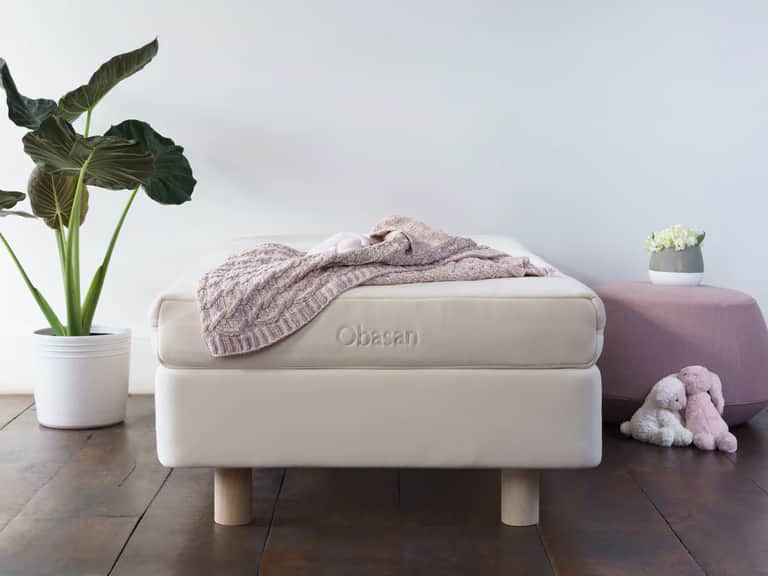
To ground the discussion, consider a concrete example: Obasan’s Organic Dunlop Latex Mattress for Children. This product foregrounds two 3" organic Dunlop latex cores, offering a flip for firmness, wrapped in organic jersey cotton. Its certification story resonates with the standard-bearers described above. The core claim—organic Dunlop latex, GOTS and GOLS-certified materials, moisture-wicking wool, and a flame-retardant-free composition—aligns with the aspiration of an archetypal NYC-friendly, non-toxic option for a child’s room or guest room.
For consumers, the product serves as a practical illustration of how an organic mattress can be designed with child safety, durability, and ease of care in mind. It’s also a reminder that a label alone does not tell the full story; the materials, construction, and testing protocols behind those labels are where trust is earned.
Note: Product visuals are provided for reference; certifications and material integrity should be verified with official documentation from manufacturers.
Reading the label beyond marketing claims
Labels are navigational tools, not passports. A well-made label conveys credible information about materials, processing, and testing. But the label can also be a form of storytelling that omits the edge details. Here are a few practical habits to cultivate when you’re in the showroom or scrolling online:
- Ask for third-party test reports and certificates, not just marketing phrases. Compare the certificate numbers with the manufacturer’s documentation.
- Request the scope of the certification. Is it covering just the cover fabric, or does it extend to the foam, core, and adhesives?
- Look for a certificate to be issued by recognized bodies (e.g., GOTS, GOLS, OEKO-TEX) and verify on the certifying body’s website.
- Check for updates on the status of the products you’re considering. Certifications can be batch- or model-specific, and materials can change over time.
In NYC, consumer rights organizations and health departments also offer guidance about safe sleep environments for children and adults. When a claim sounds too good to be true, a methodical approach—checking certificates, cross-referencing with the factory, and asking for independent lab testing—can reveal the true quality of a product.
A curated path for NYC shoppers: turning knowledge into practice
The urban sleep market is a mosaic of brands, labels, and claims. The goal of this article is not to end the conversation but to equip NYC shoppers with a framework for evaluating organic mattress claims with critical rigor. The core steps include defining the materials you want to prioritize, verifying certifications through official portals, and ensuring that the entire product—from cover to core—is accounted for under the label you trust.
If you are a reader who wants to explore this further, consider building a personal checklist for your next purchase. You can adapt the NYC-local focus by referencing nearby health and environmental organizations, retailer certifications, and regional consumer resources. The path to a healthier sleep environment is not a single step but a sustained practice of literacy, skepticism, and informed choice.
Conclusion: The ethical compass of certifications
Certifications are, at their best, a reliable tailwind for consumers navigating a crowded marketplace. They signal a commitment to safer materials, better processing, and transparent disclosure. For New York City residents—people who live in a dense urban ecosystem where air quality, housing conditions, and health consciousness intersect—the right certification is not just a badge but a practical promise: a mattress that supports sleep without leaving chemical footprints behind.
As you close the bedroom door and sink into the fabric of your choice, you are not merely choosing comfort; you are choosing trust, accountability, and a future where the materials that cradle our nights are as careful as the daylight hours are demanding. The journey toward a truly organic sleep environment begins with reading the label—and ends in a restful, untroubled night.
Notes on sources and further reading
For readers seeking deeper dives, the following references and resources offer expanded perspectives on organic textiles, latex processing, and certification standards. While some sources are historical, their influence persists in contemporary certification practices and consumer education strategies. When possible, consult the official websites of GOTS, GOLS, and OEKO-TEX for the latest cert guidelines and verification processes.